


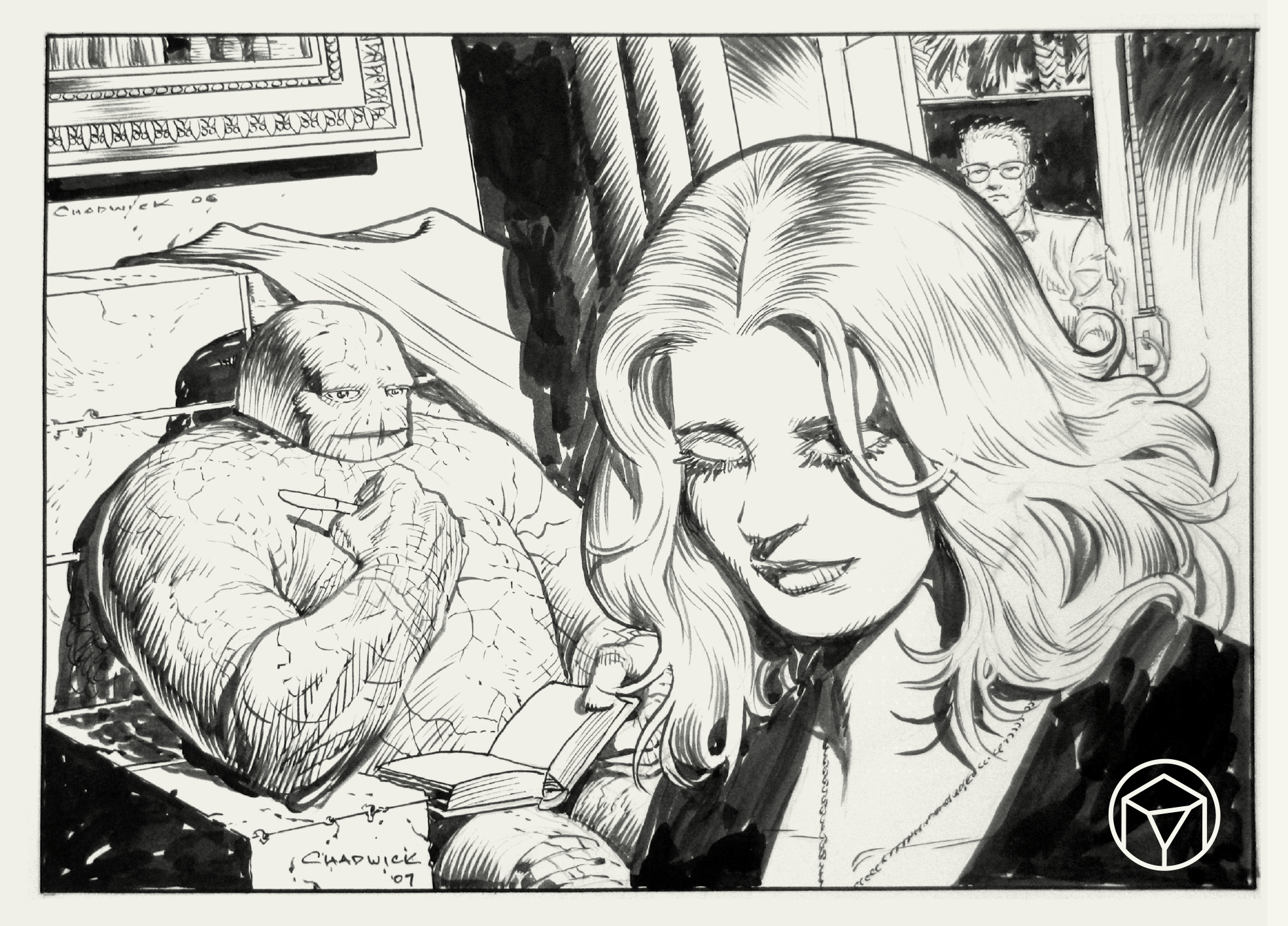
The best way to describe Ron Lithgow is “interesting but ordinary.” He’s a former political speechwriter who’s now trying to make a go of travel writing. He likes hiking, nature documentaries, and books about old-fashioned gentleman explorers. He collects tasteful artistic nudes, which line the walls of his warehouse in northeast Los Angeles. He’s secretly a little in love with his doctor, and he has a shaggy, bespectacled grad-student assistant who’s always droning on about his novel.
Ron has his flaws – he’s a bit of a glory hound, and his thoughtfulness can shade into passivity. But he has a good heart, in an average, unheroic way, and strikes us with the slightly random verisimilitude of a person embedded in the world as it was toward the end of the 20th century.
There’s just one thing about Ron, the star of Paul Chadwick’s Concrete comics. Aliens have transplanted his brain into a stony body that stands 7 feet tall and weighs 1,200 pounds. He’s pretty strong, though not disproportionately to his size. The lenses of his eyes have telescopic magnification and night vision. He can be scuffed, chipped or even shattered, but he heals. He eats rocks to incorporate them into his coating and uses a sander like an electric shaver. His physiology has some kind of internal furnace, so he can cook food in his mouth. It sounds disgusting, but the way Chadwick draws it, it’s really cute.
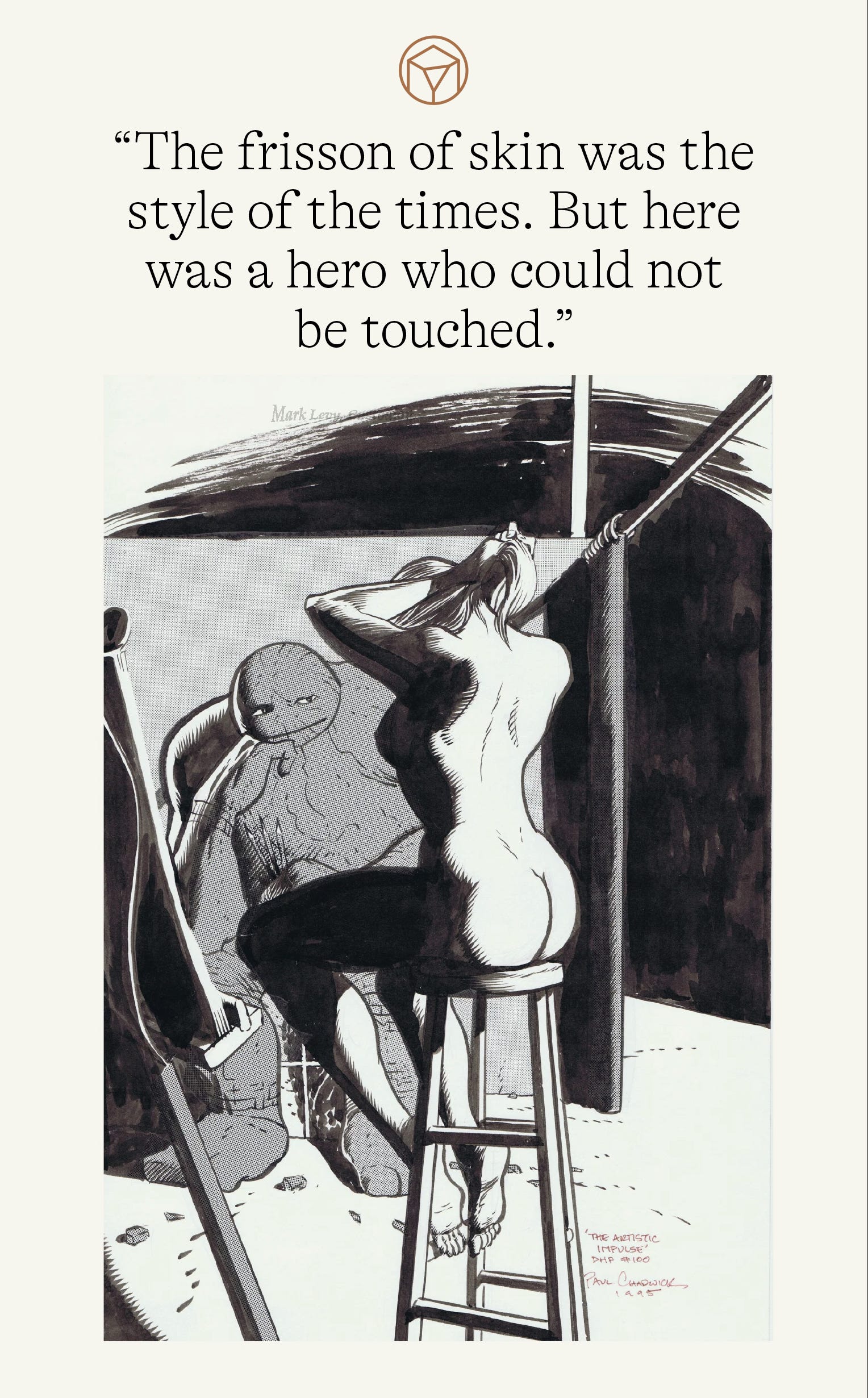
Comparison to Marvel Comics’ the Thing – another rocky, lovable monster whose power isolates him from humanity – is inevitable. The rumor that Concrete began as a rejected Thing story is stubborn enough that Brian Cronin, in his invaluable Comic Book Legends Revealed column, put it to rest just three years ago. But the Thing exists in a world where extraordinary is normal, good and evil are operatic, and emotions are didactic. Chadwick’s masterstroke was to make Ron the sole aberration in a psychologically lucid, morally complex, obsessively realistic and realized world. Concrete sounds mad to describe, yet it was one of the sanest, most serious and grounded comics of its time.
And for me as a tween, it was a salutary mirror of my own development – a term I use advisedly, as we shall see – that stood in stark contrast to the warped and bulging glass held up by Marvel and Image Comics.

As far as I know, Chadwick has been living quaintly on the Puget Sound for decades now. But first he grew up near Seattle, went to art school in California, and then spent some time in LA, drawing storyboards for movies like Pee-wee’s Big Adventure and Ewoks: The Battle for Endor. He brought a storyboarder’s clear, dynamic staging with him when he broke into comics in 1985, penciling Marvel’s Dazzler. When Concrete debuted the following year, in the first issue of Dark Horse Presents, it swiftly became the anthology’s flagship title.