


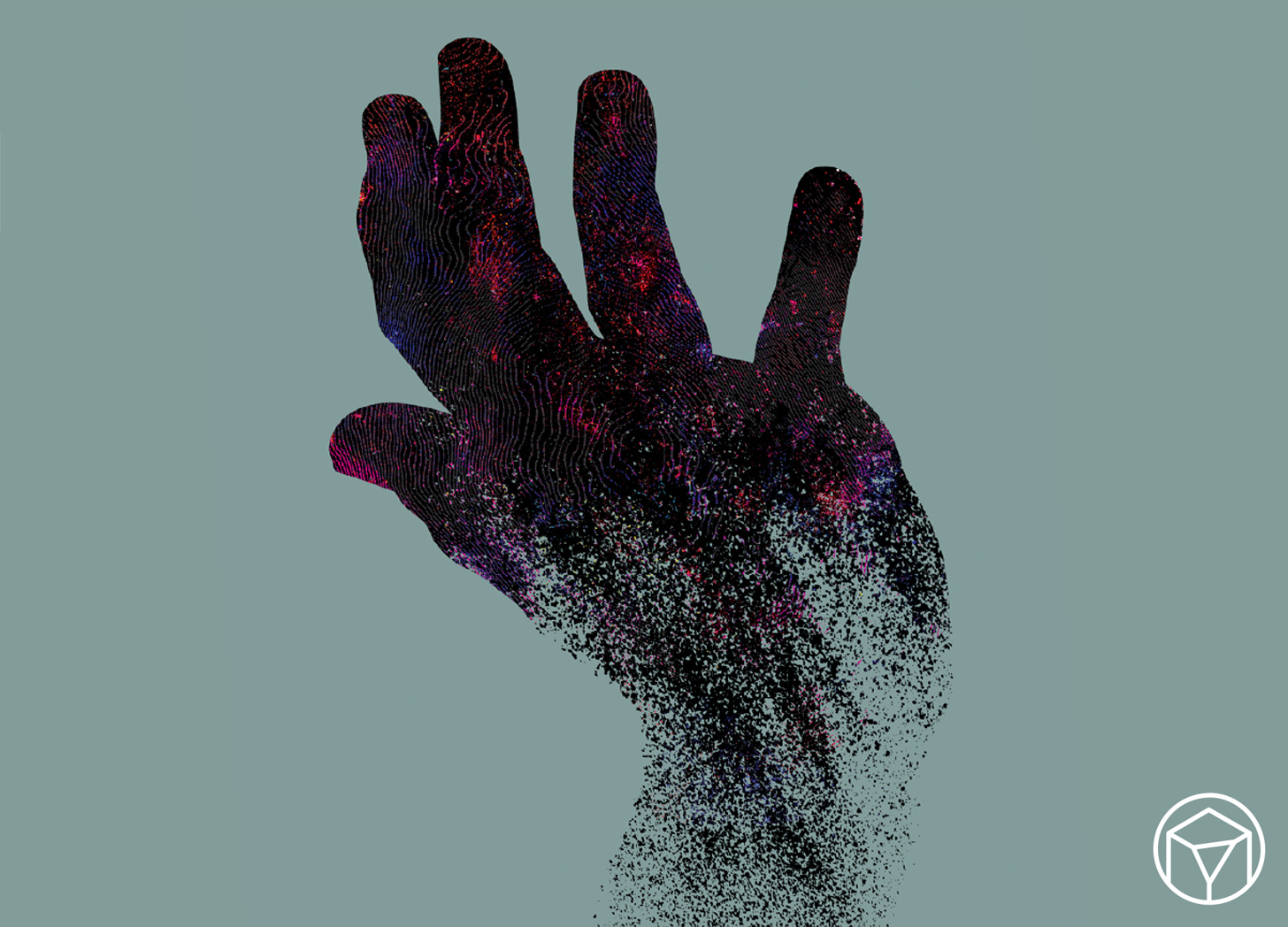
Pablo Picasso created over 50,000 pieces in his lifetime – paintings and drawings and sculptures and ceramics and collages – each one proof of a voracious obsession that devoured him in the service of creation. Art, for him, was never egalitarian; it was ruled by necessity and it overtook him in the form of obsession. In 1963, on the back cover of a sketchbook, he wrote, “Painting is stronger than me; it makes me do what it wants me to do.”
Obsession never asks permission of taste, tradition or public opinion. The word itself comes from the Latin, obsidēre, meaning to sit down before a city, to blockade it, to besiege it. Obsession does not care about balance or distribution: It seizes, it commands, it transforms. Creation does not emerge from consensus or moderation but from the violence of a singular vision imposed without compromise, because obsession is never a negotiation.
And what is obsession if not also a surrender, a giving over of the self to something larger?
La petite mort is a French expression that describes the feeling of a brief loss of consciousness post-orgasm; it means “the little death.” It implies that fleeting moments of intensity happen alongside annihilation, and that when the self vanishes and the ego dies, something grander – more powerful, more important – takes hold. Intensity is about disappearance: At the peak of what we’re capable of feeling, we dissolve into the thing we’re doing, we let our obsession capture us. Obsession is not discipline’s doppelgänger or talent’s twin; it’s the state of being where you choose not to return from your little death and instead surrender to the monomania of creating something that could never have come from moderation at all. “Every act of creation is first an act of destruction,” said Picasso.
The present culture says balance is our salvation: Eat a salad but also indulge in a burger, work for eight hours but also do something unrelated on the weekend, count your breaths and steps and hours of sleep. Balance is ergonomic, inoffensive, and designed to prevent collapse. The balanced person is never destroyed, but also never rebirthed; they live on the lukewarm shore, safe but shallow. Balance is about distributing your energy evenly to make sure nothing overwhelms – it’s the default philosophy of the accountant and the dietitian. Balance is the kind of advice we give when we just don’t care that much: drink enough water, touch more grass, pursue hobbies.
Balance is about survival, yet we all know that survival isn’t enough. Everywhere we go, we look for a taste of the absolute, some fracture in the ordinary through which the infinite might pour – so why settle and shrink into safety when the whole demand of being is to exceed itself?
The human being walks upright. We are the only animal that operates on the vertical axis, and our existential posture reflects our anatomical one, reaching upward for what exceeds the temporal, material and profane dimensions of the universe we swim in. We’re the only species enraptured by beauty as if it were the fingers of God reaching down from where we came from, reminding us that our toil is not just for survival but for culture, significance, mythos and connection. We’re the only beings with an appetite for meaning beyond information, for revelation beyond stimulation.
Obsession is the duty of the bipedal because standing up is a declaration, a refusal to be neutral or passive. Obsession is the refusal of grazing, wandering, and scrolling. Obsession never compares to what’s on its left and right; instead, it looks up. It’s not just the Nietzschean will to power; it’s the Olympian will to transcend, to fixate on one thing, to ignore all false idols and draw the whole self toward a singular high-fidelity purpose. Obsession says: this, and not that; here, not anywhere. And if not this, then give me nothing at all. Obsession: Abandon all hope, ye who enter…
An upward spiral, obsession has no work-life balance, because the right work – the kind that stokes the fire in your chest, wakes you up in the morning with ambition and passion, demands your best from you – will tip your life out of balance in the most chaotic yet exuberant way possible. Without obsession, you’ll wake up one day and realize you’ve been living the life you settled for and not the one you truly wanted.
Balance does not create prima ballerinas or star athletes; it does not produce Beethovens or Kafkas or Bourdains. A philosophy of moderation did not lead to the RMS Titanic, the design of the martini glass, the Mongolian conquest, the prized Persian cat, or the Cologne Cathedral. Moderation did not send man to the moon. Moderation did not invent the electric vehicle. Moderation did not abolish slavery. The future is created in the image of the obsessed: Every change in the world is somebody’s will made visible, somebody who, through time and talent and dedication, cannibalized themselves until nothing was left but the bones of a symphony, a company, a novel, an invention.
Where moderation keeps the self intact and secure, obsession kamikazes you into your most excruciating passion, demanding that everything you are must be remade in the shape of your calling. Creation requires distortion. Only when attention is narrowed and driven beyond measure does it pierce the surface of the ordinary. What looks like imbalance is actually the price of making anything that endures. Obsession is the feeling that everything irrelevant must fade out of focus, that social hours are only detours, that meals are only interruptions, and that only one thing matters. Plato called it “mania,” the gifts that lift the soul beyond reason, the frenzy that makes the poet sing, the lover risk, the thinker glimpse beyond the human. Obsession, though commonly associated with the tortured artist or the fanatic, is actually the precondition for all craft.
Anyone who has dared to lean into their obsession has sampled the flight of Icarus firsthand, the feeling of flying across heaven’s yawning mouth, seeing eye to eye with that angry yolk, its golden arteries of light spilling across a comatose, dream-drunk sky, and looking down at all those who are too scared to pursue their ultimate vocation – those who let their dreams die before they do are those who die many times before their death. In your bravest vision, everything is imaginable, and everything that’s imaginable is doable, and you’re the one to do it. A puritan’s piety – sheepish acceptance of the status quo – is rarer in your brave new world than penguins in the Sahara.
Obsession is a hand outstretched in the clouds, seeking for some touch of grace that will transform it into a hand that bestows gifts. Obsession is a solo attempt to cast oneself into the glowing aura of something eternal; it’s an invitation to let the muses speak through you. To create from the soul is to be utterly consumed in it, all to fit the infinite radiance of something holy into the frail little cradle of your own worldly existence. It’s why museums, art galleries and libraries are like temples: They’re buildings to which people pilgrimage so they can marvel at things that remind them they are but a speck in the grand history of a species that has been reaching for everlasting and indestructible love for a long, long time.
It’s either obsession or oblivion: all, or nothing. In the end, only the things created out of our obsessions can capture our imagination forever.


Lightning in a bottle can only be captured by those willing to stand outside in the storm. Loved this read
Amen! Signed, "The shaman seemed surprised when my past life reading suggested I had literally been Lord Byron and Camille Claudel in back to back incarnations, but I was like 'yeah that tracks.'"