


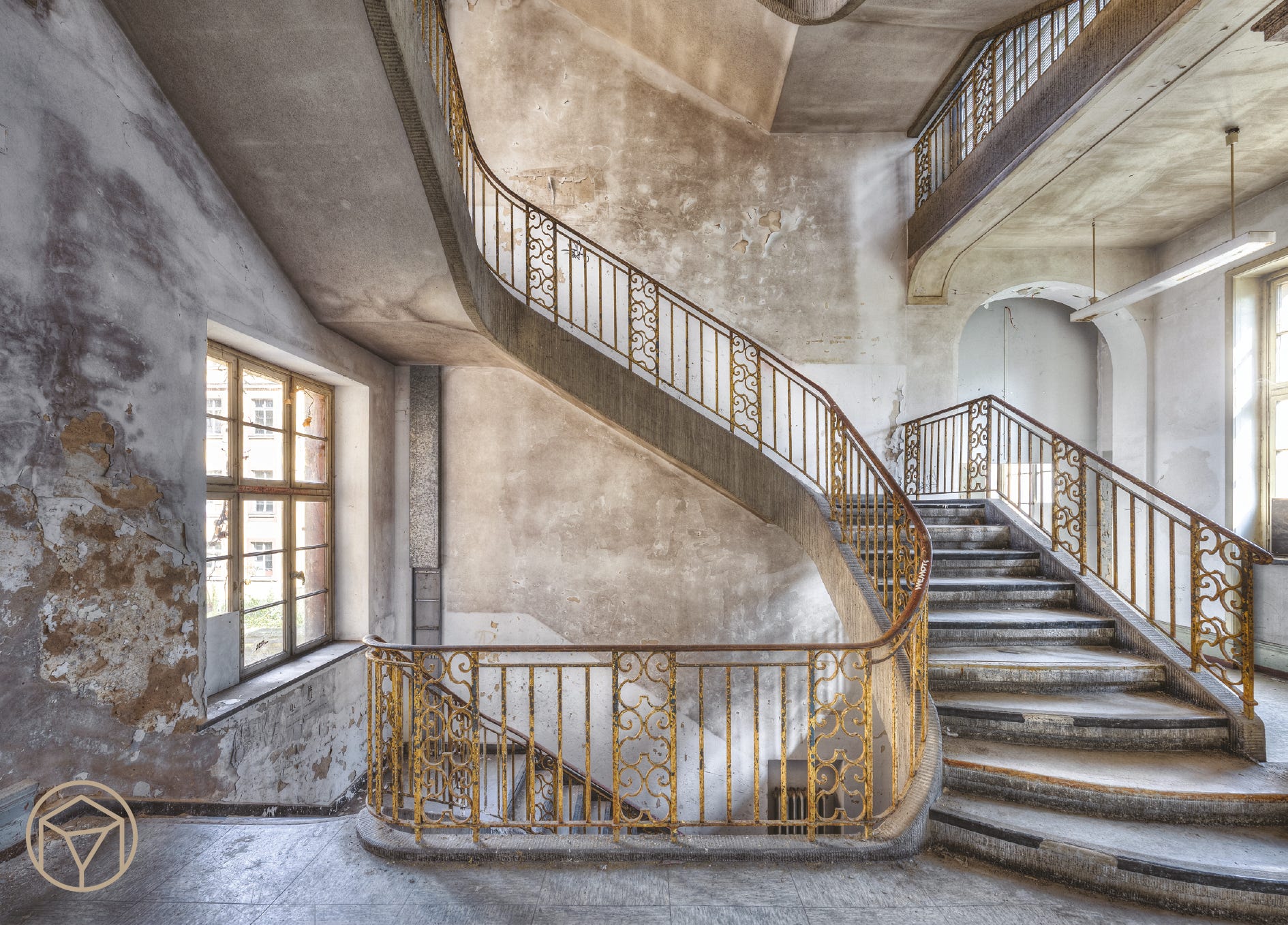
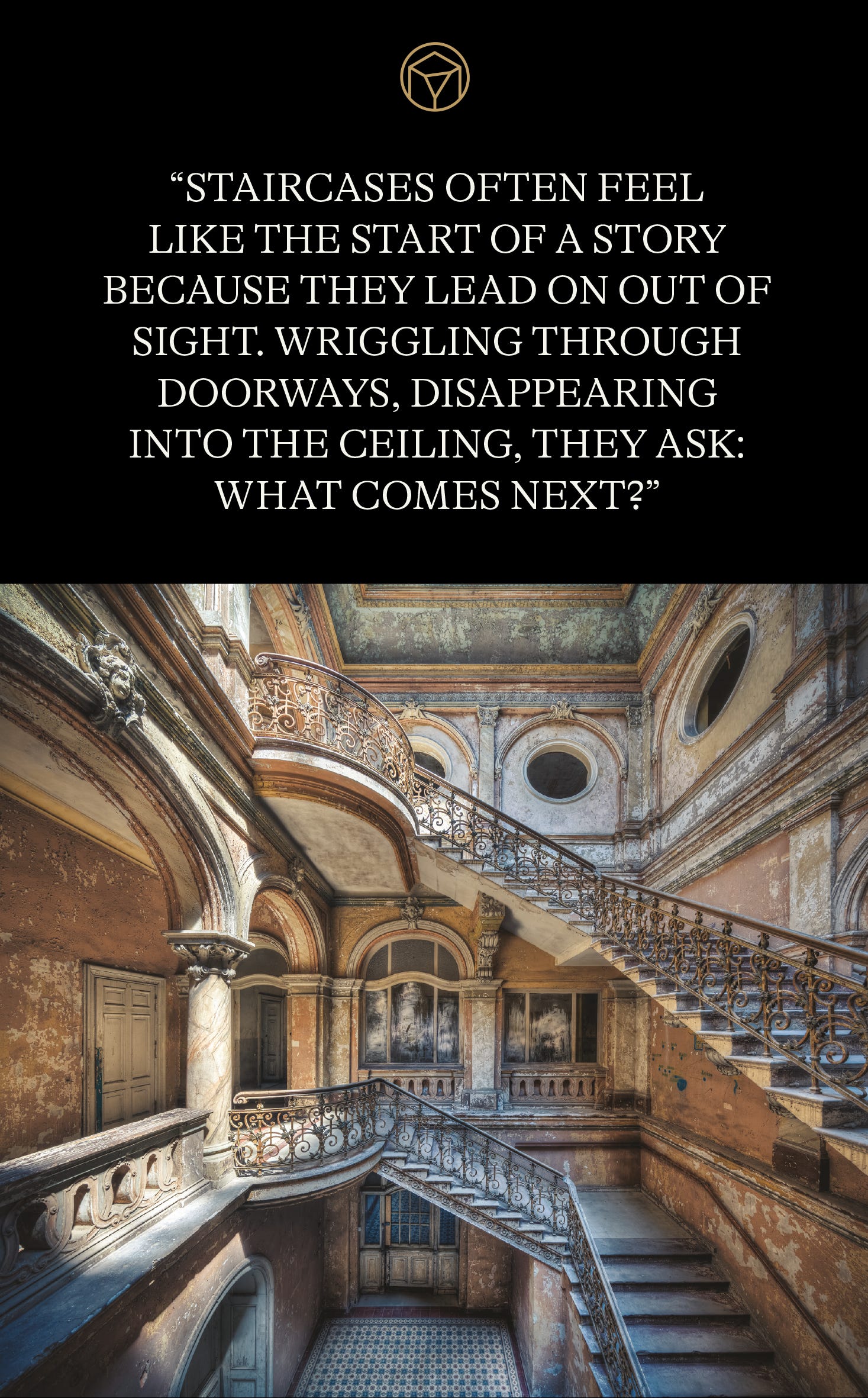
The French have an enviable term: l’esprit d’escalier. A sweet glissando of syllables, it refers to the thing you wish you had said before you left. And it’s a reminder, too, that there’s something a bit tricky about staircases. There’s something unresolved about them. They are a riddle, a puzzle. Staircases often feel like the start of a story because they lead on out of sight. Wriggling through doorways, disappearing into the ceiling, they ask: What comes next?
Robin Hudson loves staircases. He’s an urban explorer and photographer who travels the world capturing pristine images of desolation and decay. He creeps through abandoned sanitariums and navigates old ballrooms. He’s at home in a caved-in church or the rusting and neglected control room of a power station. And whenever he sees a staircase ...
“The best staircases are connecting points,” Hudson says. “The questions I always get about photographs are: What is this and where is this? And with a staircase, it’s always: Where does it lead? Where does it come from?” He laughs. “What you try and do as a photographer is keep that sense of mystery. A staircase shows a journey within a building. You can have a very static-looking building, but a staircase will imply movement.”
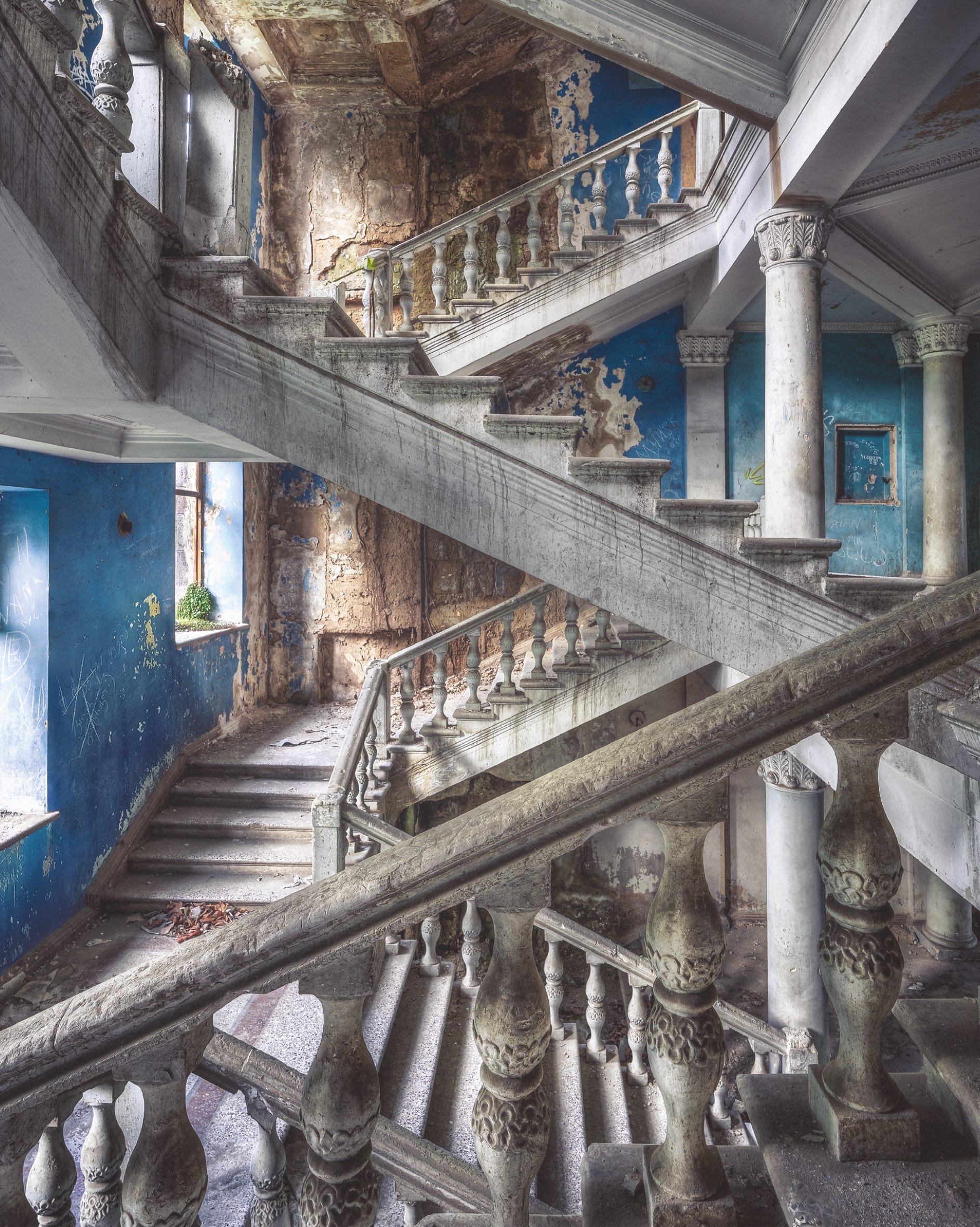
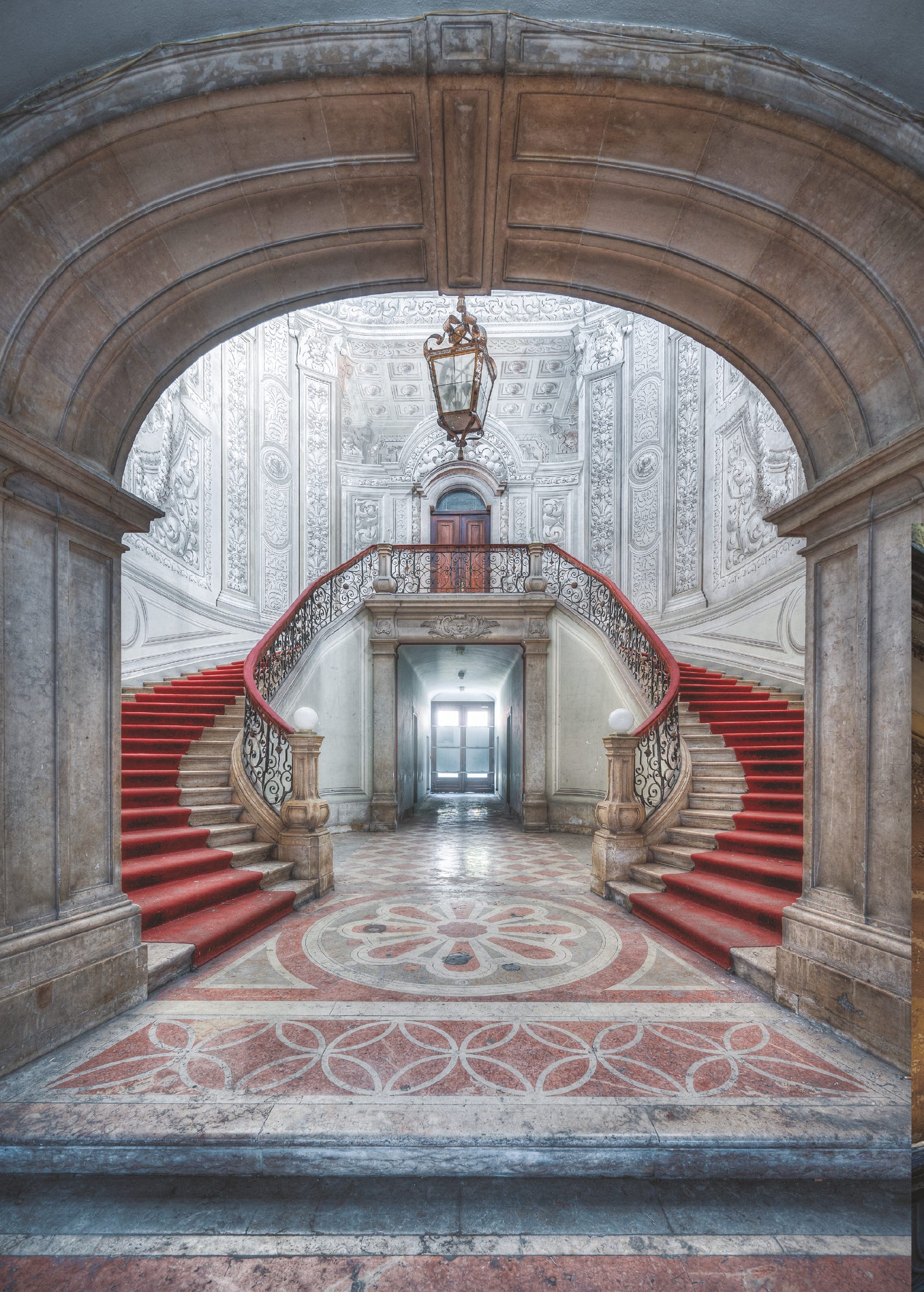
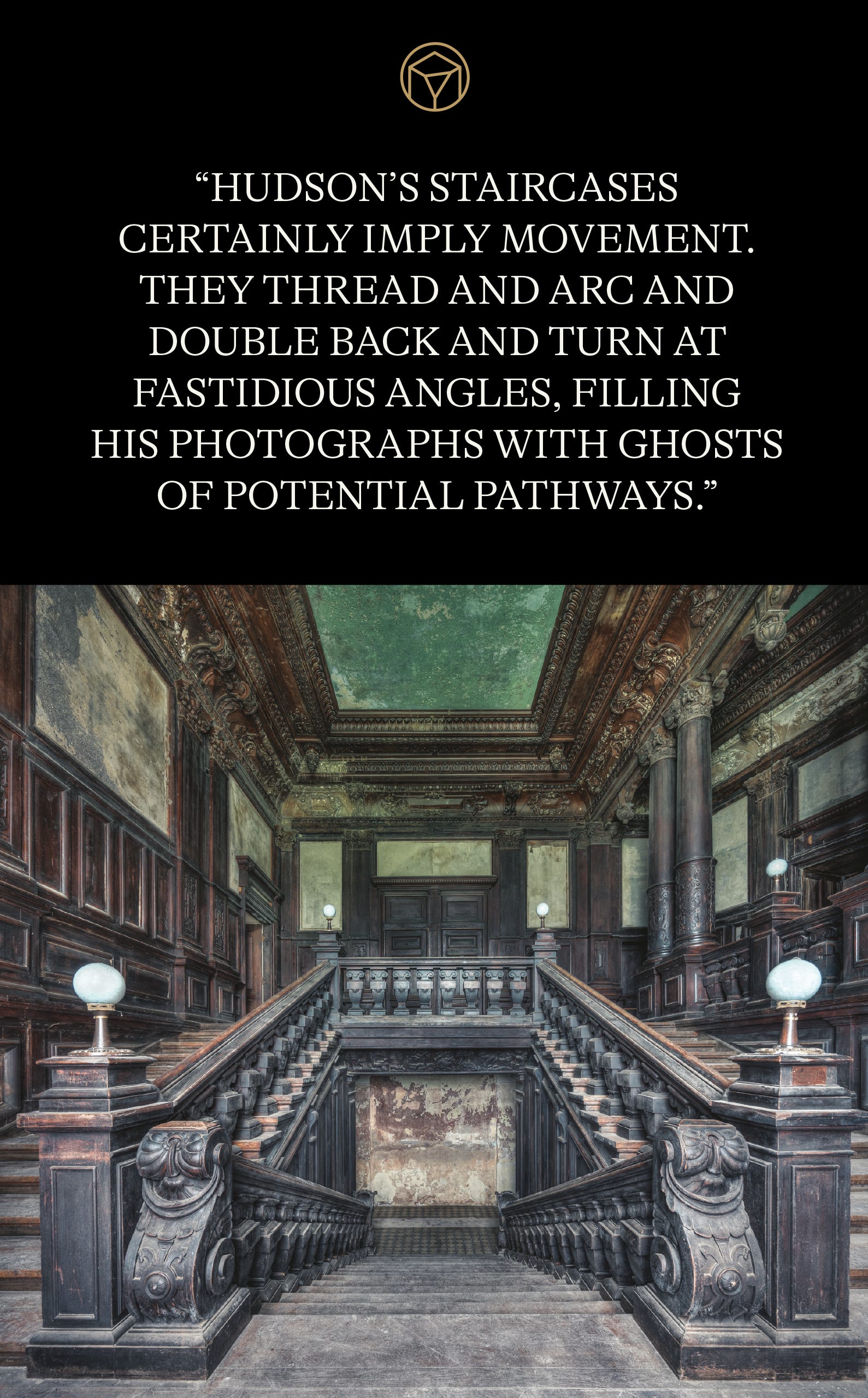
Hudson’s staircases certainly imply movement. They thread and arc and double back and turn at fastidious angles, filling his photographs with ghosts of potential pathways. For the viewer, they can lead you deep into your imagination in that way that photographs are so singularly good at: What do I think lies at the end of these stairs? For Hudson, they often lead to memory.
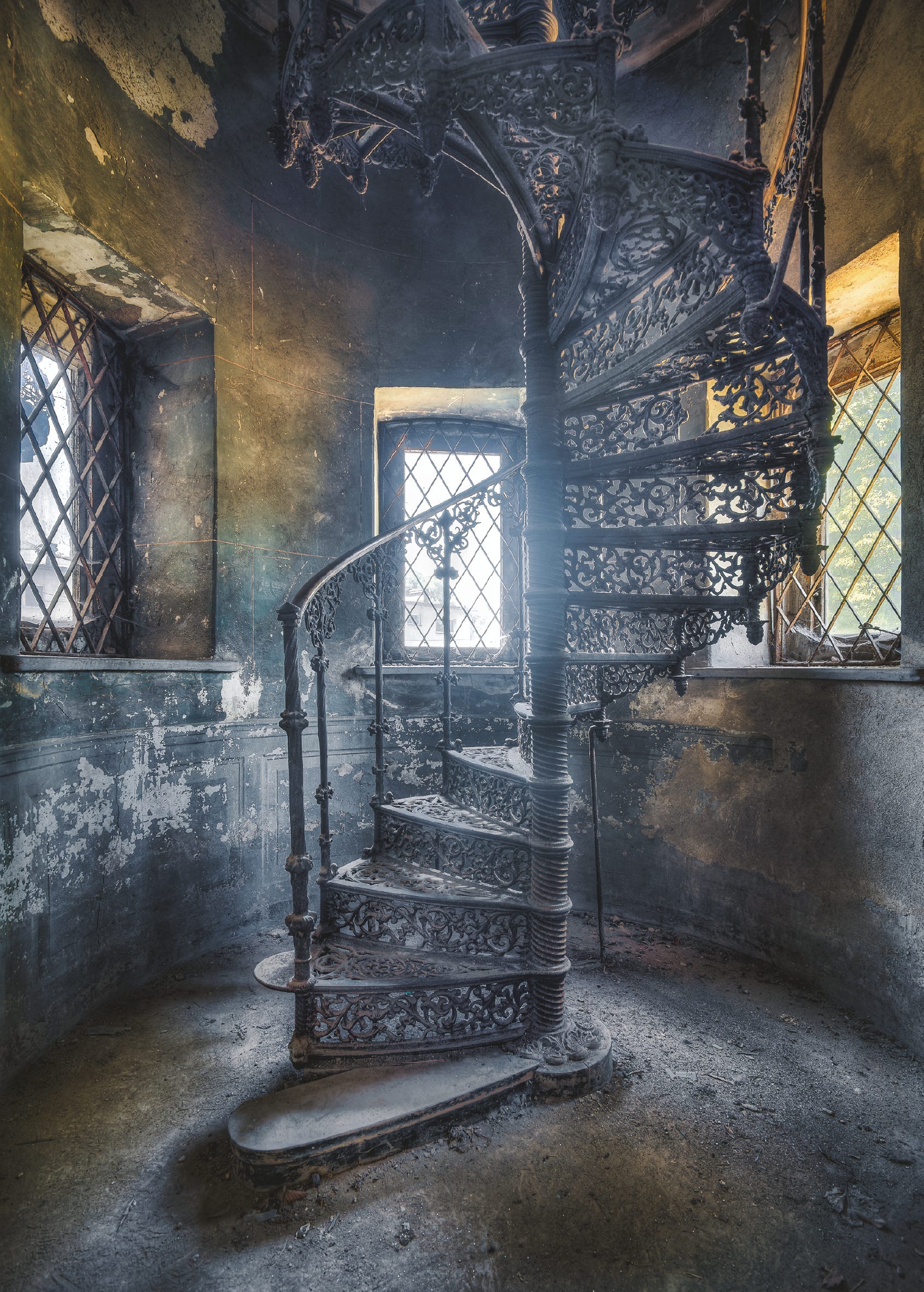
In practical terms, staircases help Hudson keep track of the sometimes complex places in which he finds himself. “You always try to retain a map in your mind,” he says. “It can be confusing, depending on the scale of the place you’re exploring. If you’re in a three-story sanatorium, then you’re trying to remember each section. For example, there’s a place in Georgia where every floor has a different motif on the stairs. You’re always trying to remember where you are, what the details are. One of the staircases has grapes on it.”
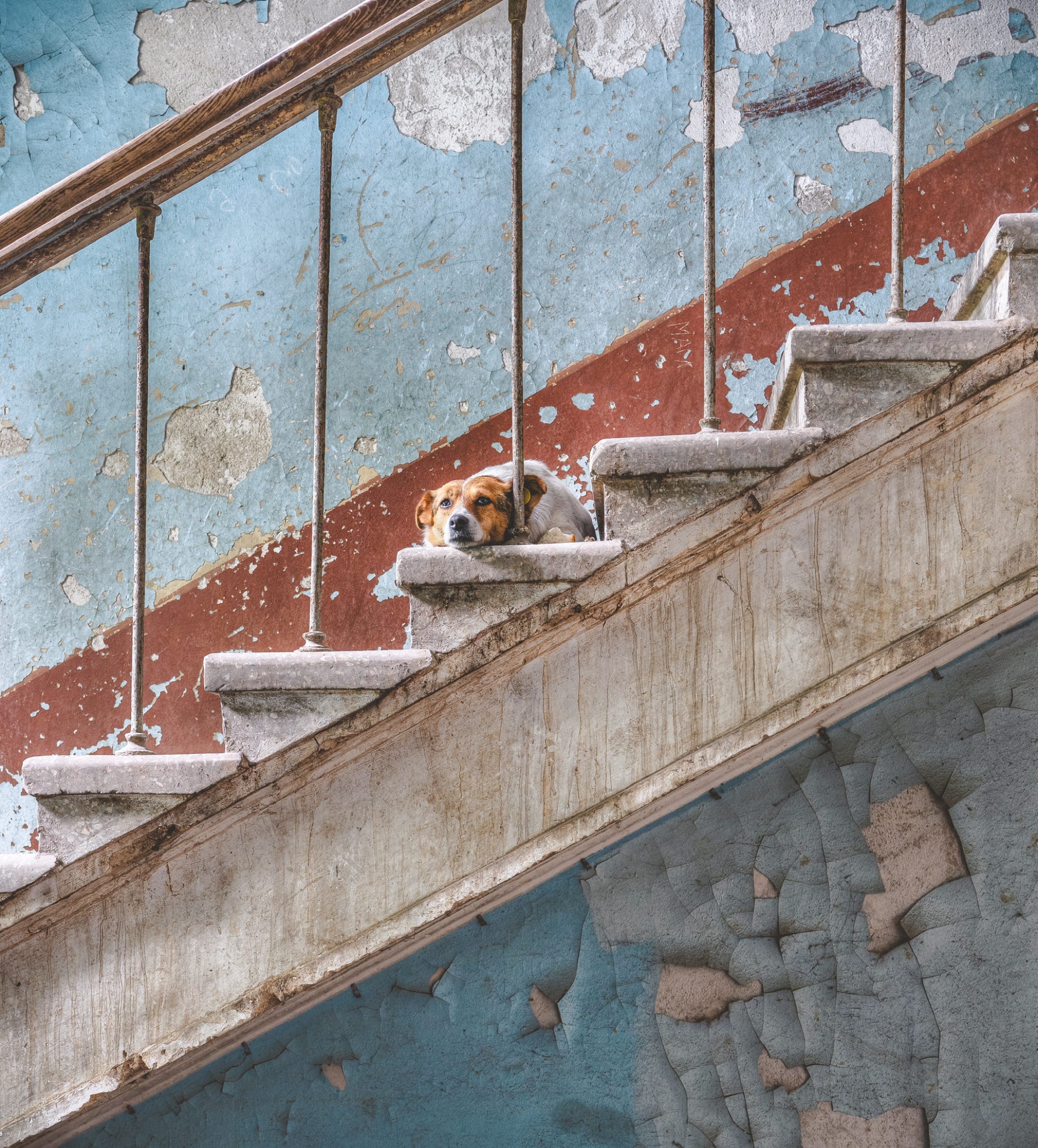
So it seems that staircases tell at least two stories? There’s the story of the building that unfolds through the photographs, and for Hudson, there’s the hidden story of his own journey through that space as he tries to get those photographs. The staircases often match the complexity of his own journeys, too. “The stairs that I really enjoy are where there is a loop or things crossing over each other,” he says. “It’s not just a leading line. In most photographs, you’re looking for a leading line to guide the eye. But stairs are way more complicated than that. The leading lines are zigging around the whole of the frame.”
When it comes to the spaces Hudson visits, the staircases are often at the heart of everything. Just as modern buildings are constructed around their elevator shafts, Hudson’s ruins frequently seem to orbit their staircases. “They will often be central,” he says. “They’re of utmost importance. There’s certain things within a building. If they fall down, if a room collapses, if a wing disappears, it doesn’t ultimately make a difference. But as soon as the staircase goes, that can change whether you can access the building at all. It changes your actual experience of being in there.”
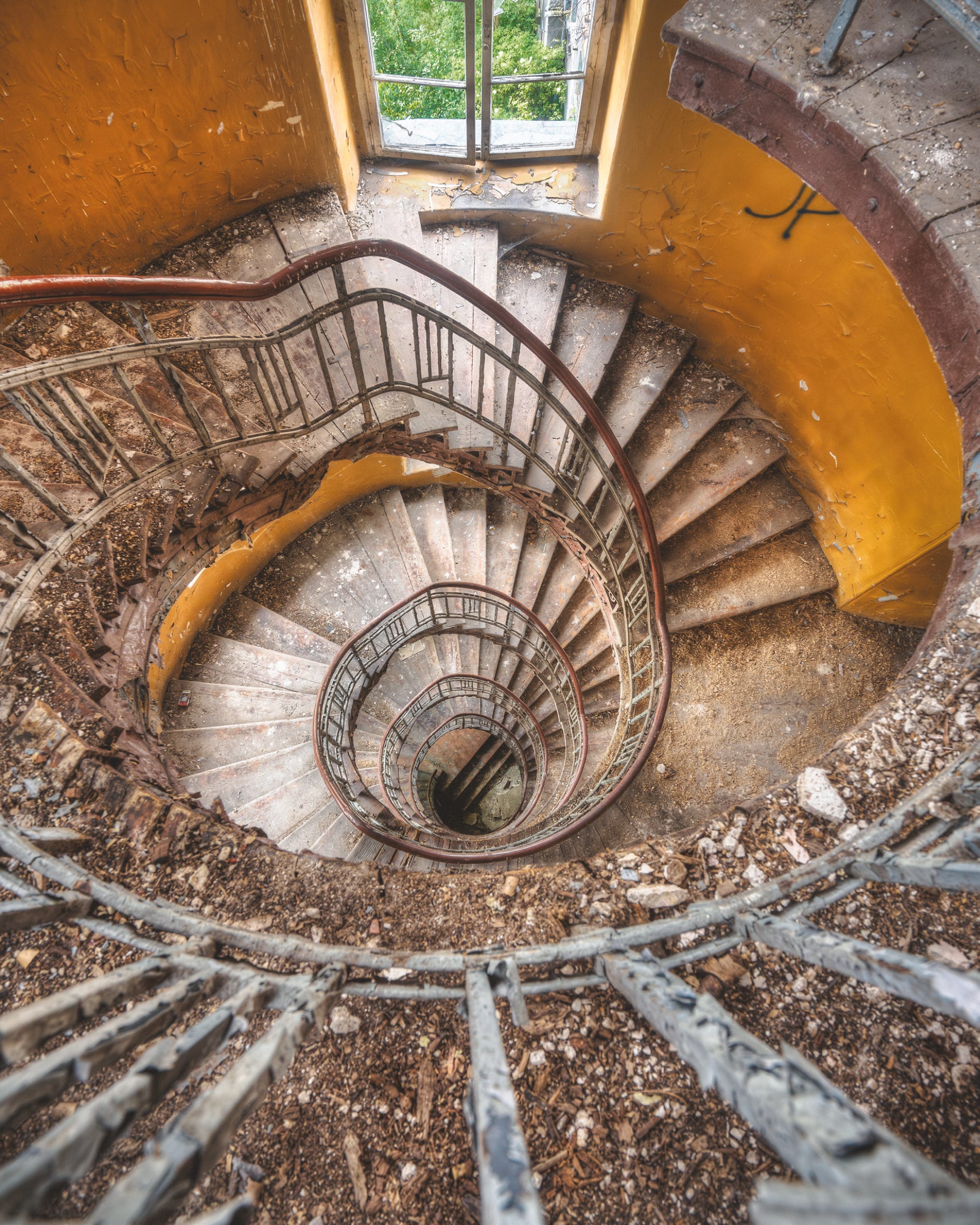
Staircases are tricky to photograph: Each of these images is a thing that Hudson sweated to create. Often there’s little space to place the camera. Often the light is limited. Sometimes – Hudson still thinks about one memorable example – metal thieves have come in and lifted the railings, so the exposure opens out on either side.
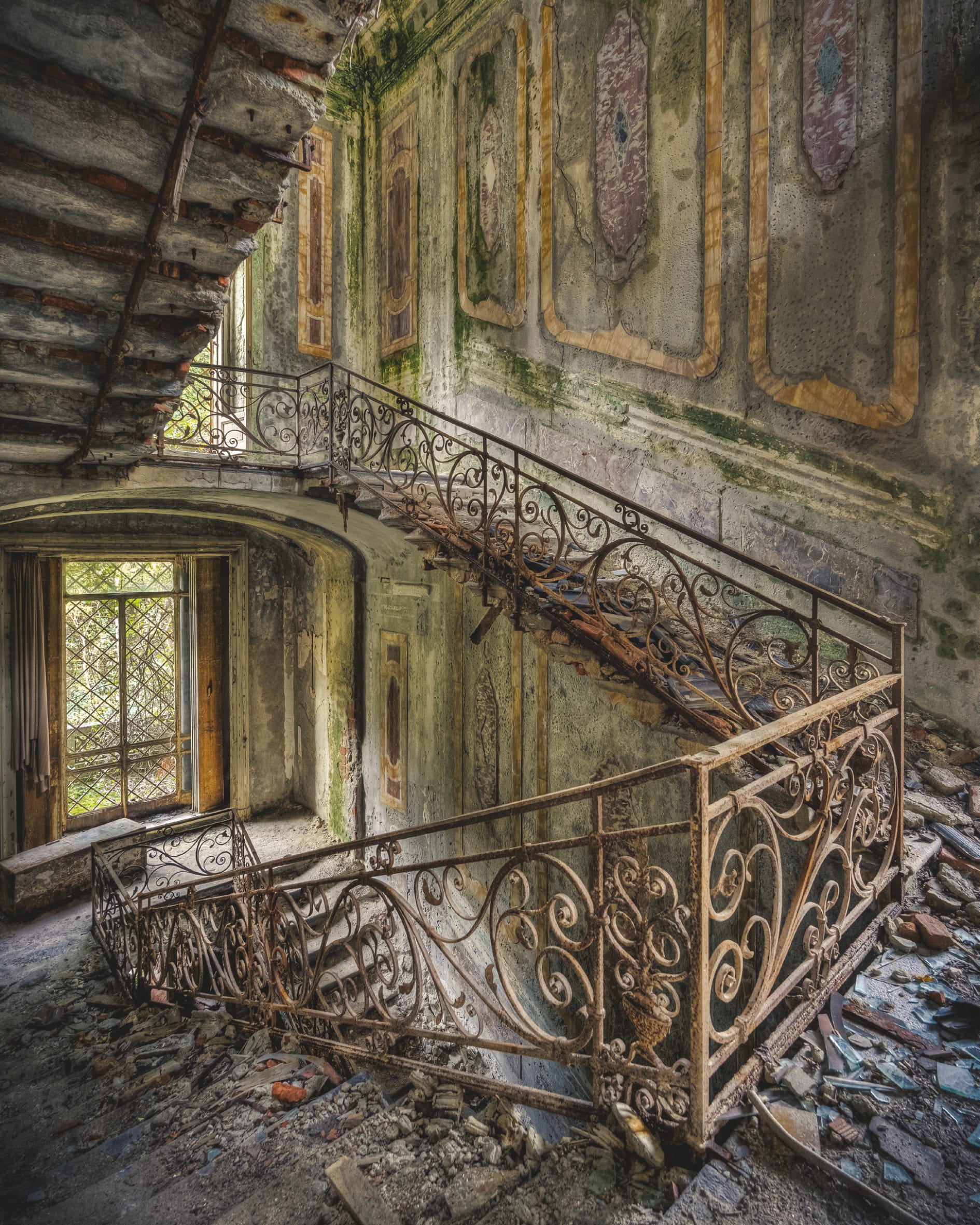
But it’s worth it. And Hudson has a clear idea of why it’s worth it. He loves the work of M.C. Escher, with its sharp angles and impossible staircases. “I was obsessed with him growing up,” he says, “just the maths behind the art, the way he structures things, the fact that you can look at his work for hours and hours.”
“That’s it.” He laughs. “You can look at it for hours and never quite get to the conclusion.” Just like one of Hudson’s own staircase photographs.

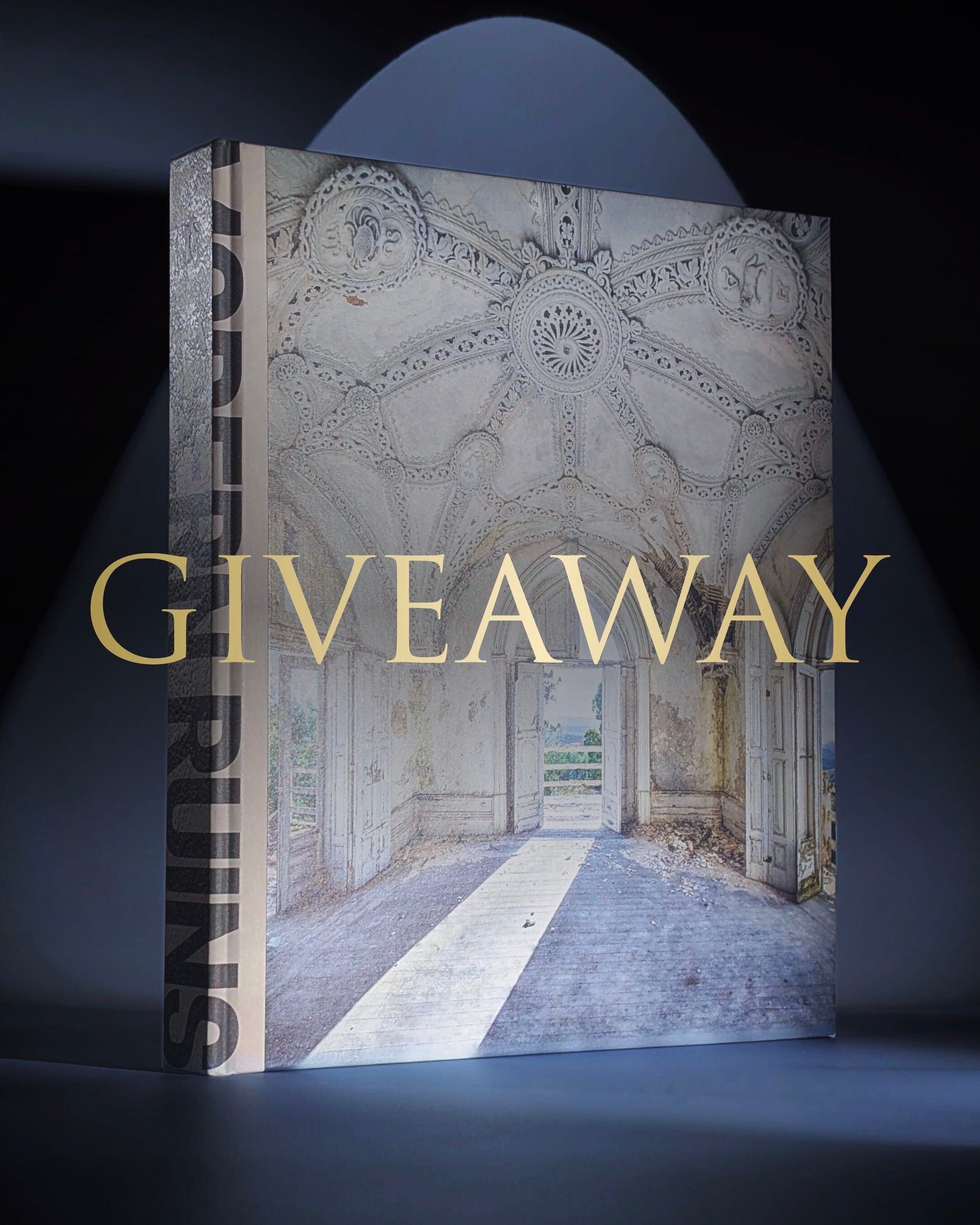
To celebrate Robin Hudson’s work, we’re giving away three copies of Tune & Fairweather’s large format art book, Modern Ruins, featuring hundreds of photographs by Robin.
To enter:
Subscribe to Chisel on Substack (free or paid)
Like, comment, and restack this story on Substack
Get a Bonus Entry: Tag two people who you think would enjoy Robin’s photography on a social post sharing this article
Entries close on 11/18.